
Learn more
- What do they weigh?
Alpacas can weigh up to 80 kg (the weight of approximately 1 adult human), whereas llamas can weigh up to 200kg (the weight of approximately 2.5 adult humans).
- What do they eat?
Alpacas and llamas are herbivores, which means that they eat plant material. Their foods of choice are grass and hay but they also eat grains, vegetables and other plant matter as well. Alpacas and llamas are like cows and sheep in that they chew their undigested food (cud) but unlike cows and sheep, they have only three stomach chambers instead of four.
- Why are they from?
Alpacas and llamas were domesticated for their meat, wool and ability to carry heavy goods for us and travel long distances. More recently, farmers have taken to keeping them on their farms to protect other livestock. Their long neck lets them see predators in the distance and they will kick and spit at threats, making them excellent guard animals.
- How are alpacas and llamas different?
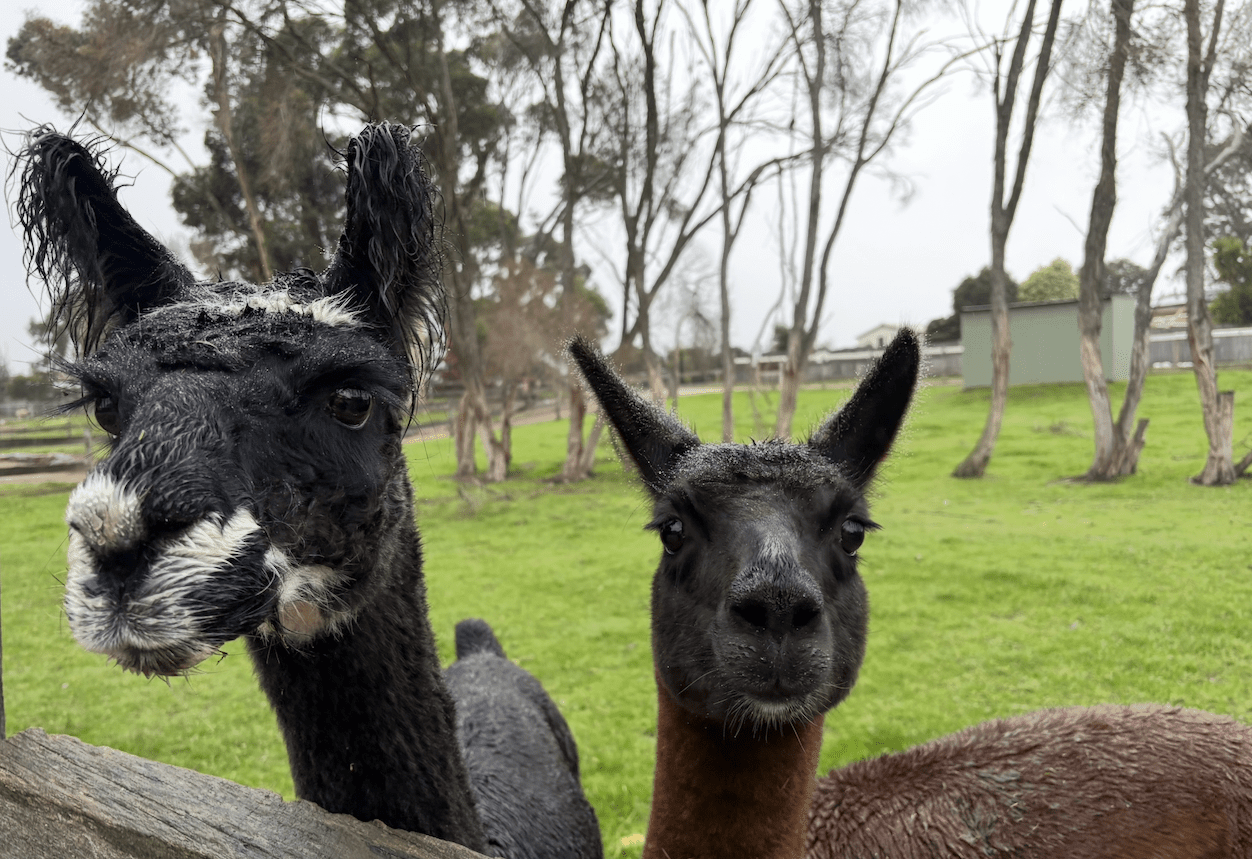
Alpacas and llamas are related to each other, but are two different species. Llamas are larger with longer faces and have banana-shaped ears. Their wool is also different in texture: Alpacas have softer, more valuable wool compared to llamas.
- Life cycle
A male alpaca/llama is called a Macho/stud (or gelding if desexed). A female alpaca/llama is called a Hembra/Dam. A baby alpaca/llama is called a cria and when an alpaca gives birth it is called "unpacking." Alpacas and llamas usually give birth in the morning as it gives the cria enough time to dry before nightfall when it gets cold. Cria can drink milk from their mother for over 6 months.
- Fun facts
There are two breeds of alpaca and they have different types of wool: huacaya wool grows in long locks whereas suri wool makes the alpaca look like a fluffy cloud.
Alpacas and llamas will seek out many different weeds as part of their diet, making them great for weed control! Because their feet are soft and padded, they don't squash the surrounding vegetation when they graze, leaving the plants and soil beneath unharmed.